

There are many ways to help save the oceans and their inhabitants. If you’re not out there in the trenches, then why not support conservation organizations that are making a real difference in the world?
In the list below, you’ll find the seven ocean charities I fully believe in and support. This started with a list of 7 charities back in 2021, with now five left, that I wholeheartedly recommend:
My favorite manta ray non-profit: Manta Trust & “The Cyclone”
Through our work at Manta Ray Advocates, introducing readers and real-life guests from all over the world to the magic of manta rays, I know that more and more people are making efforts to protect manta rays (and all of their cool cousins) from extinction.
The Manta Trust is a non-profit organization that offers its supporters a sneak peek behind the scenes: videos, stories, regular updates, and more. Their community, “The Cyclone”, is named after a yearly phenomenon happening in the Maldives, where up to 200 manta rays gather to feed in an area no bigger than a soccer field. It’s a spectacular event – and we truly hope the impact the Manta Trust has on manta ray conservation will be as remarkable over the years.
Community-centered projects to save the oceans: SeaLegacy
SeaLegacy is a global ocean conservation organization that uses the power of visual storytelling to protect the ocean and inspire action. Their mission is simple and powerful: protect marine ecosystems by showing the world what’s at stake and what’s possible when we choose protection.
Through films, photography, and advocacy campaigns, SeaLegacy supports the creation of marine protected areas, amplifies Indigenous and local voices, and helps turn science into stories people can feel and act on.
One great example of their work is Giant Mantas of Mexico: A Sea of Hope, a short film set in Mexico’s Revillagigedo National Park. Five years after the park received full protection, the film shows an incredible recovery of marine life, including the endangered giant oceanic manta ray. Co-founder Cristina Mittermeier and marine scientist Frida Lara explore how giving the ocean space to recover allows species like manta rays to return, thrive, and rebalance entire ecosystems.
The presence of manta rays is not only symbolic, but ecologically vital. Their return to Revillagigedo shows that ocean protection works and offers real hope for marine conservation around the world.
→ Learn how you can get involved and support SeaLegacy projects
Save marine life by tidying their habitat: The Ocean Cleanup
Did you know there’s almost more plastic than fish in the ocean? If nothing gets done, plastic will outweigh fish in our oceans by 2050.
That’s why I’m a fervent supporter of The Ocean Cleanup, a project committed to ridding the Great Pacific Garbage Patch (between Hawaii and California) of its garbage. It’s estimated that this area contains over 100,000,000 kilograms of floating plastic. They use advanced technologies to do that, and I’ve been following the project for many years.
As a former engineer, I’m intrigued by the ingenuity of founder and CEO Boyan Slat and his team. They don’t just want to protect marine life by cleaning up the oceans, but they’re tackling the problem at the source, focusing on rivers as well, and advocating for stronger international plastic regulations.
→ Find out how to support Ocean Cleanup
Creating hope spots: Mission Blue, the Sylvia Earle Alliance
Dr. Sylvia Earle is one of the most inspiring ocean conservationists out there. Her conservation organization, Mission Blue, wants to raise public awareness and support for a worldwide network of marine protected areas – critical to the health of the ocean – which they call Hope Spots.
Since 2008, Mission Blue has been organizing expeditions to Hope Spots around the world, documenting these marine environments and working with local communities to protect them.
Dr. Earle encourages everyone to use their own special talents to help fight for the ocean.
→ Find out more about Mission Blue and how to support them
Protecting aquatic ecosystems: Marine Megafauna Foundation
Some of the world’s most threatened marine species are the ocean’s giants – what we call marine megafauna. This group includes manta rays, whale sharks, sea turtles, dolphins, and other large species that keep ocean ecosystems healthy and in balance. The Marine Megafauna Foundation is on a mission to save them using pioneering research, education, and sustainable conservation solutions.
Founder Dr. Andrea Marshall was the first person in the world to complete a Ph.D. on manta rays, so it’s simply natural for me (and other manta ray advocates) to support her work! She was also deeply involved in the discovery of the third species of manta ray, the Atlantic manta.
The foundation is located in Mozambique, where it leads conservation efforts in the region and contributes to projects all around the world.
→ Support the Marine Megafauna Foundation
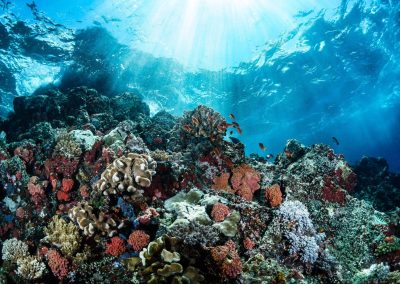
Raise awareness about coral reefs: Chasing Coral
Coral reefs around the world are disappearing at an unprecedented rate. That’s why a team of divers, photographers, and scientists created Chasing Coral, a documentary film in which they set out to discover why – and to share their findings with the world.
→ Watch the trailer for Chasing Coral here
Several great movements originated from this movie, and as the movement grows, so does the impact of their work. As a supporter, you’ll help them protect our coral reefs and work towards a clean energy future – starting today.
Side note: Chasing Coral producer Larissa Rhodes joined us on a manta snorkeling adventure with her family, and we immediately hit it off, as I’ve been writing and speaking about coral bleaching and related issues for years as well.
→ Find out how to support Chasing Coral
Why I choose to support these conservation organizations
We can do anything, but we can’t do everything. While we at Manta Ray Advocates focus on protecting manta rays, we also realize that’s just a tiny drop in the ocean. That’s why I support ocean conservation organizations that I trust, follow, and even get involved in at times… and I hope you’ll be doing the same!
If you know someone who cares about the ocean, share this article with them. The more people who learn about these projects, the bigger the ripple effect we can create.




0 Comments