
We love data and statistics here at Manta Ray Advocates! As we take guests to swim with manta rays (almost) every night, we keep track of a multitude of things like
- Which manta rays we see every night
- How often each manta shows up at our regular spot, the Kauna’Oa Bay viewing site
- What injuries some of them endure (and how those injuries heal)
- How often we need to cancel the tour due to high surf or unsafe winter conditions
- How often we need to take precautions against box jellyfish
- And much more.
Here are some of the 2025 statistics crew member Savannah shared when she joined Martina on the Ocean Wings podcast at the beginning of 2026!
Which manta rays showed at Kauna’Oa Bay in 2025?
We had (at least) 18 individual manta rays show up at Kauna’Oa Bay in 2025.
13 females:
- X-Wing
- Kamala Ray
- Vegemite
- Obama Ray
- Louisette
- Jolene Ray
- Luana Ray
- Gita Ray
- Celestial
- And an unknown female that showed up 4 times, but we couldn’t identify.
And 5 males:
- Lana Del Ray (yes, definitely a male!)
- Otho Dee
- Pu’uwai
- Black Diamond
- Sea-Kei
If you participated in our manta swim in 2025 (or any other year), met one of the mantas above (or any other manta), and have pictures or stories to share, don’t hesitate to add a note on that manta ray’s page – or contact us directly!
How often did we cancel in 2025?
We don’t like to cancel our moonlight snorkeling activities – but sometimes, it’s just the safest option. When we can read the surf forecast far enough out (up to 15 days ahead), we’ll reach out to guests in advance and let them know ocean conditions aren’t good enough for seeing manta rays. Other times, the call happens on location: when we see the wave height and angle firsthand, we realise it’s safer not to go through with it.
Since winter conditions make cancellations more likely, we’ll often take a planned company break around February.
In 2025, January and February each had 28 cancelled nights. February was a full shutdown; we didn’t operate at all that month. March had 11 cancellations: 10 due to high surf, and one night was cancelled because of box jellyfish activity. Peak season (May through October) had only a handful of cancellations: a few in April due to high surf, and one night in July because of a tsunami warning.
What’s the average sighting success each month?
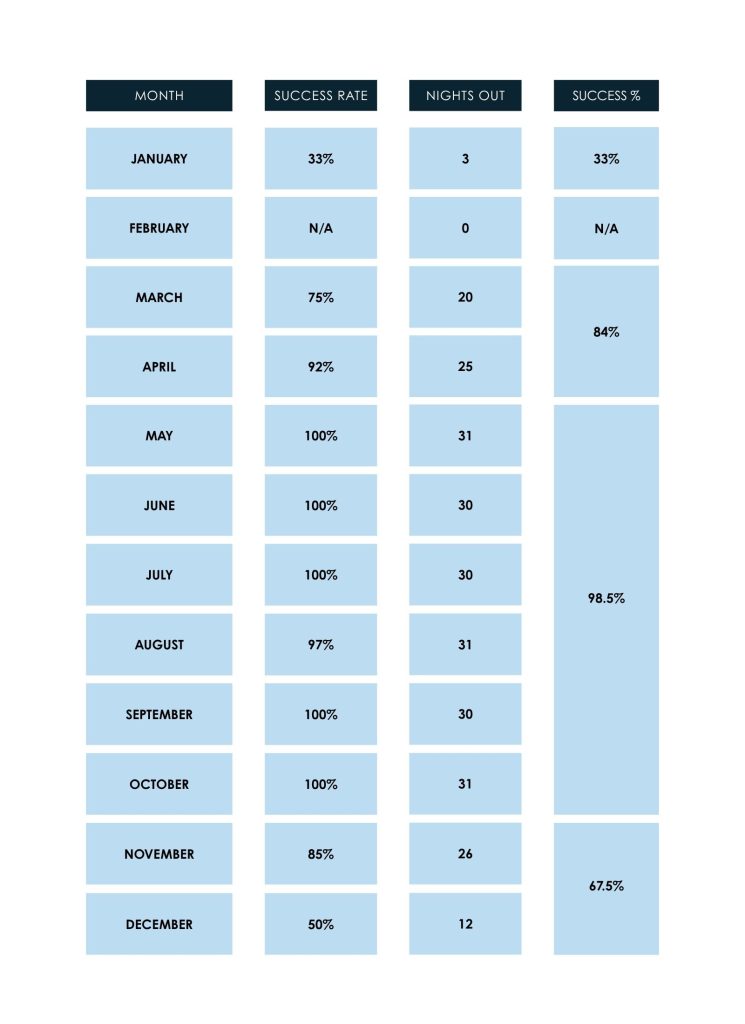
We operated 270 nights in 2025. From April through October, our sighting success rate was over 96%; in the peak summer months (May, June, July, and September) we had mantas every single night we went out.
The winter months (January-February and November-December) mean we go out into the water less often. Fewer operating nights means fewer data points, and the percentages reflect that. January’s 33% comes from one manta sighting across three nights out; we simply didn’t operate the rest of the month.
November and December followed the same pattern: as we transitioned back into winter conditions, cancellations became more frequent, and sighting rates dropped accordingly. The numbers for those two months averaged out to around 67%.
Read more about the best times (of the year) to swim with mantas in Hawaii!
Which manta rays did we see most often?
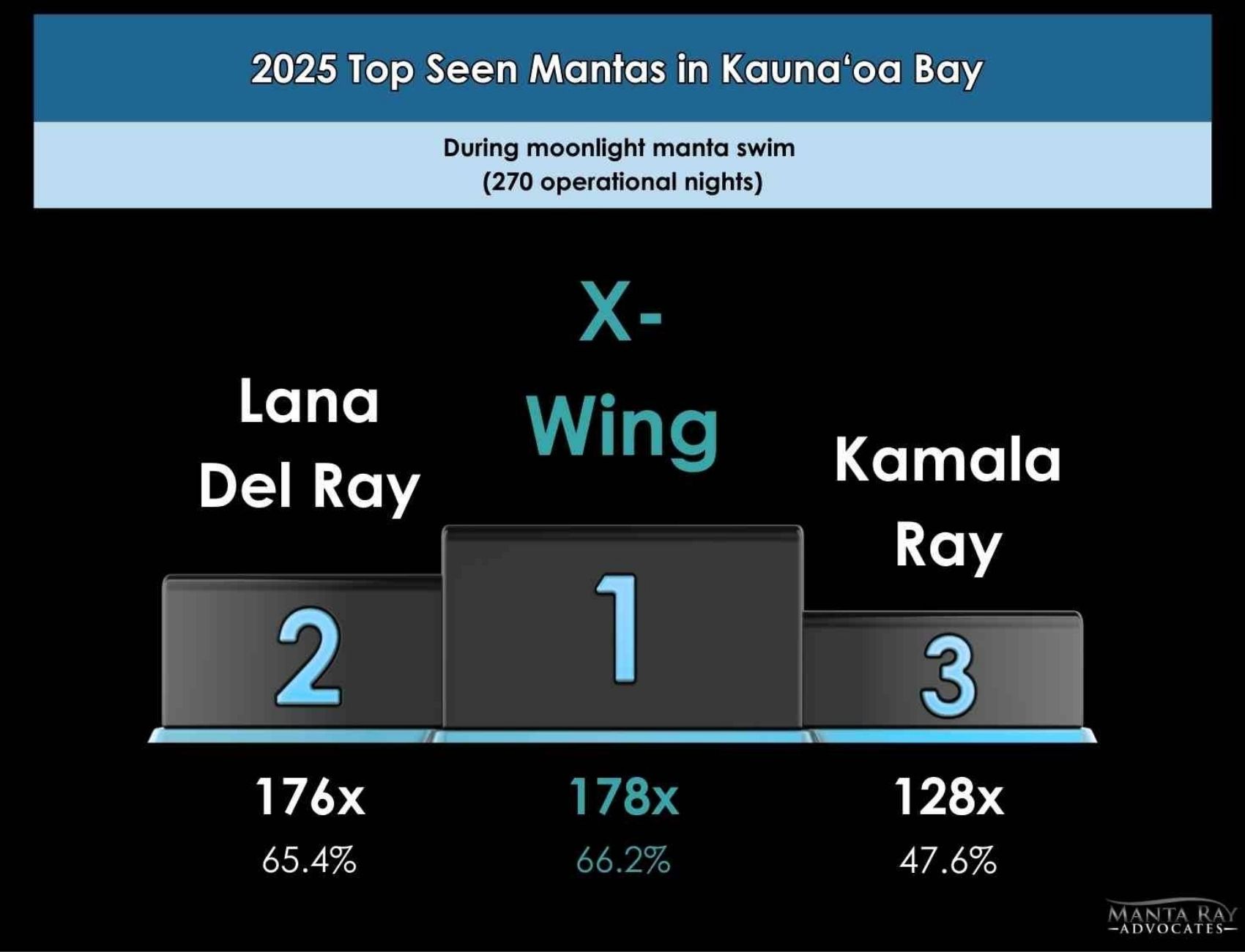
Of the 18 individuals who showed up (regularly or occasionally) at Kauna’Oa Bay, three stood out:
- X-Wing showed up 178 nights out of 270, making her our most-sighted manta of the year. This is remarkable, given that she only joined our regular group in mid-2024.
- Lana Del Rey (who first showed up on July 13, 2024) came through on 176 nights.
- Third place goes to Kamala Ray, with 128 nights. We’ve watched her grow up since she was identified as a small pup in November 2021, and at this point, she knows the drill pretty well: lights at the viewing site = plenty of food to be expected!
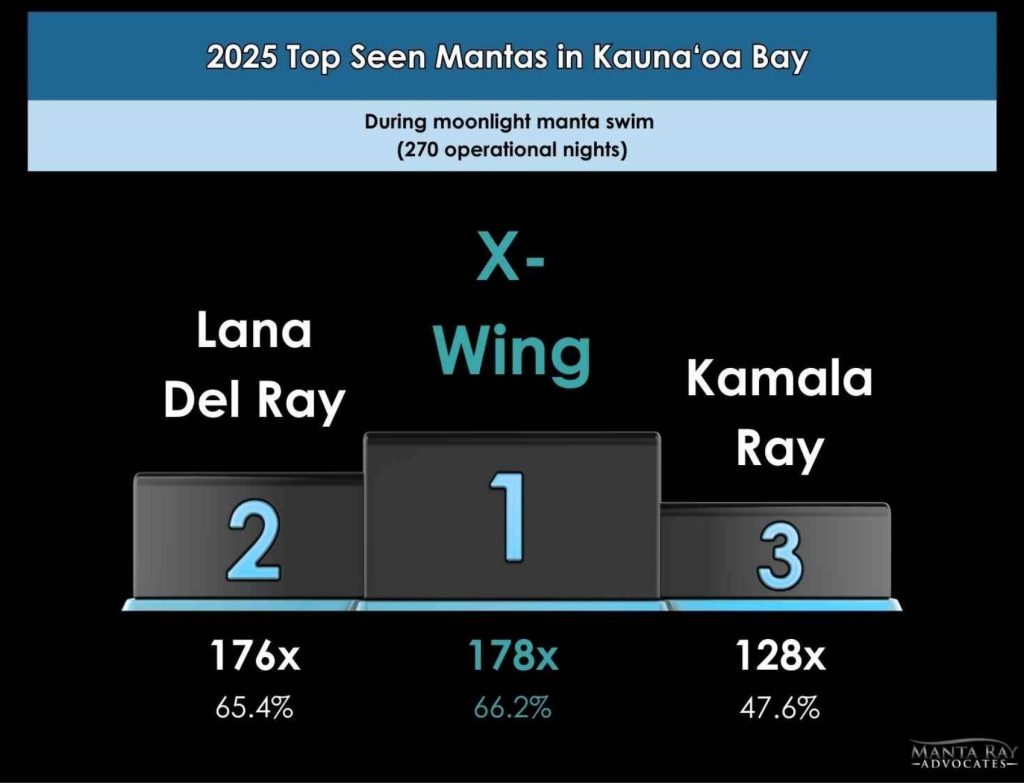
When one manta shows up, it’s a good night. X-Wing, Lana Del Ray and Kamala Ray made a lot of participants very happy and showed up on nights when conditions were less predictable.
Related materials
If you enjoy digging into data, you may want to review our manta ray sighting statistics from 2009–2014, including annual summaries from 2011–2013.
Be sure to check out Black Diamond Ray’s page in the manta ray library – it tells the full story (with pictures) of him showing up during an evening swim with a large fishing hook in his cephalic fin, trailing 12 feet of fishing line behind him… to the night almost two years later when the hook fell out while he was at the viewing site, and we almost got that on film!
For more behind the scenes on the workings of our snorkeling tours, listen to the episodes of the Ocean Wings podcast with crew members Ashley Jacobs and Savannah Maira.




0 Comments